5 Best Stablecoins for 2026: Yield, Stability, and Compliance
Navigating the 2026 stablecoin landscape requires distinguishing between regulatory compliance and genuine yield potential. We evaluate top contenders like USDC and USDT against primary reserve reports and jurisdictional frameworks to identify assets that balance stability with legal security.
1. USDC (USD Coin)
USDC remains the institutional standard for regulated stablecoins. Issued by Circle, it is fully backed by cash and short-term U.S. Treasuries, with monthly attestation reports from independent auditors. Its compliance with U.S. financial regulations makes it the preferred choice for traditional finance integration and enterprise payments. While yield is not inherent to holding USDC, it is widely supported in DeFi protocols for lending and liquidity provision.
2. USDT (Tether)
Tether (USDT) holds the largest market capitalization and trading volume among stablecoins, making it the default liquidity provider for most cryptocurrency exchanges. Backed by a reserve mix that includes cash, cash equivalents, and other assets, USDT offers unparalleled depth for traders. However, its regulatory scrutiny regarding reserve transparency persists, requiring users to weigh liquidity benefits against compliance risks.
3. DAI
DAI is a decentralized, crypto-collateralized stablecoin managed by the MakerDAO protocol. Unlike fiat-backed coins, DAI is issued through over-collateralized debt positions in Ethereum, ensuring stability without reliance on traditional banking infrastructure. Yield opportunities for DAI holders vary based on protocol demand and stability fees, offering a decentralized alternative for those prioritizing censorship resistance over regulatory clarity.
4. PYUSD (PayPal USD)
Launched by PayPal, PYUSD represents a significant entry into the regulated stablecoin market. Fully backed by U.S. dollars and short-term U.S. Treasuries, it undergoes monthly attestation by independent auditors. PYUSD’s primary advantage is its seamless integration with the PayPal ecosystem, offering millions of users easy access to stablecoin payments and transfers with established consumer protections.
5. EURC (Euro Coin)
EURC provides exposure to the Euro within the cryptocurrency ecosystem, issued by Circle and fully backed by euro-denominated cash and cash equivalents. It is regulated under EU electronic money directives, offering a compliant option for European users and businesses. While liquidity is lower than USD-backed stablecoins, EURC is essential for traders and institutions requiring direct Euro settlement without traditional banking delays.
How to evaluate stablecoins in 2026
The stablecoin market has shifted from pure yield chasing to regulatory safety. With Tether holding 59% of the market share and USDC establishing itself as the institutional favorite, the selection criteria for 2026 demand a focus on compliance and reserve transparency rather than just market capitalization.
Regulatory compliance is the primary filter. Coins like USDC are preferred by traditional finance because they adhere to strict reporting standards, whereas others operate with less oversight. This distinction matters for long-term stability and legal safety.
Reserve transparency ensures the peg holds. Investors must verify that every token is backed by high-quality liquid assets, such as cash or short-term government treasuries. Without clear, auditable proof of reserves, a stablecoin’s value is speculative.
FX peg stability is the final test. A reliable stablecoin maintains its value against the US dollar during market volatility. Look for historical data showing minimal deviation from the $1.00 peg during high-stress periods.
Comparing Yield, Risk, and Liquidity
Choosing a stablecoin involves balancing three competing forces: how much yield it generates, how strictly it is regulated, and how easily you can move it. USDT (Tether) and USDC (Circle) dominate the market by volume, but they serve different risk appetites. USDT offers deep liquidity and high trading volume, making it the default for active traders, while USDC is preferred by institutions seeking regulatory clarity and transparent reserves.
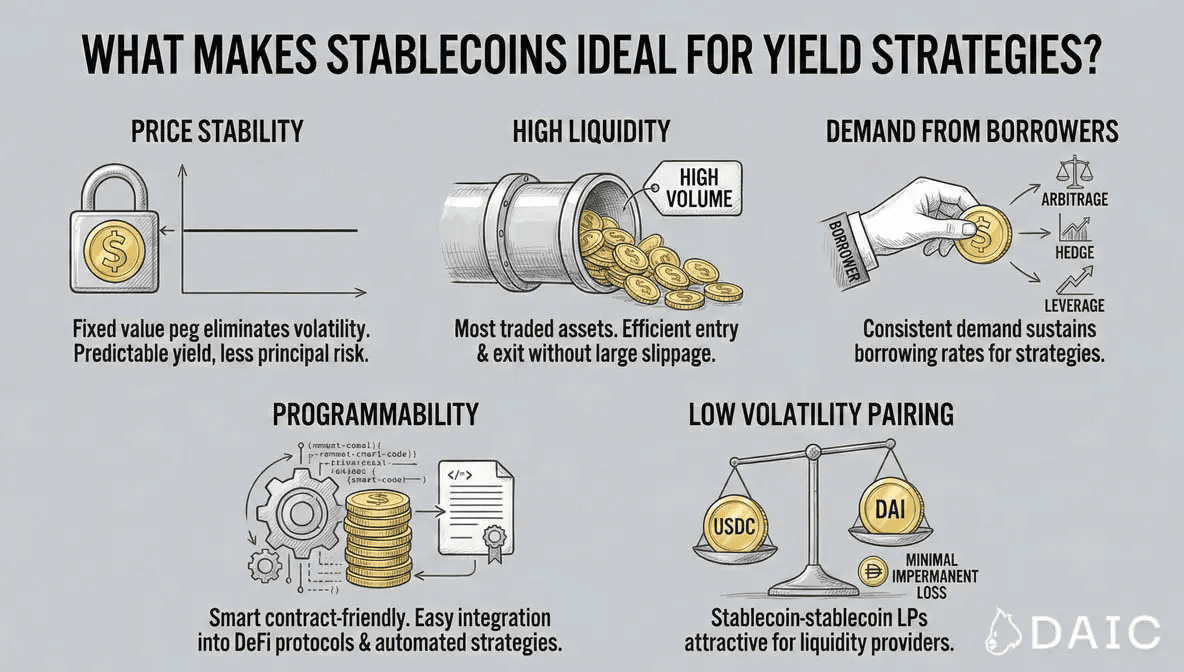
The table below compares the core attributes of the top stablecoins. USDC and USDT lead in market share and liquidity, while DAI offers a decentralized alternative with variable yield based on protocol usage. EURC and JPYC serve niche fiat-backed needs but have lower liquidity and higher counterparty risk due to their smaller scale.
| Stablecoin | Yield Potential | Regulatory Risk | Liquidity |
|---|---|---|---|
| USDT (Tether) | Low | Medium | High |
| USDC (Circle) | Low-Medium | Low | High |
| DAI | Variable (1-5%) | Low | Medium |
| EURC | Low | Medium | Low |
| JPYC | Low | High | Low |
USDC’s regulatory advantage comes from Circle’s compliance with US financial laws and regular attestation reports, making it safer for holding large sums. USDT’s market dominance is driven by its presence on nearly all exchanges, but its reserve transparency has faced scrutiny. DAI’s yield fluctuates based on demand for borrowing within the MakerDAO protocol, offering higher returns but with smart contract risk. EURC and JPYC are useful for specific fiat exposure but lack the liquidity depth of USD-backed coins.


As an Amazon Associate, we may earn from qualifying purchases.
No comments yet. Be the first to share your thoughts!