

In the volatile landscape of 2026 international trade, exporters face mounting pressure from fluctuating exchange rates, particularly with the euro's 11% appreciation against the U. S. dollar to $1.16 over the past year and projections pushing it toward $1.24 by year-end. Meanwhile, the Japanese yen holds steady at 158 JPY/USD, anticipated to strengthen to 146 JPY/USD. These shifts demand sophisticated multi-currency stablecoins exporters strategies, where EURC and JPYC emerge as pivotal tools for locking in exposures without the friction of traditional forex markets. Japanese exporters, for instance, traditionally rely on invoice currency choices, pricing pass-through, and operational hedging, yet stablecoins offer a seamless digital alternative amid annualized hedging costs of 1.57% for EUR/USD and 1.42% for EUR/JPY.
Weak European and Japanese currencies have historically bolstered product competitiveness against Chinese rivals, as noted by WisdomTree analyses. However, with the euro strengthening, euro-area firms must pivot. Research from the European Commission highlights how exporters protect against appreciation through euro invoicing and hedging, contributing to export resilience. For SMEs, Duke surveys reveal key lessons: not all exposures warrant full hedges, with optimal ratios around 66% for euro-based investors and 80% for Japan-based ones per Morgan Stanley estimates. This is where EURC JPYC hedging shines, enabling exporters to hold stablecoin positions that mirror fiat pegs precisely.
Currency Volatility's Toll on Global Exports
Exporters in 2026 navigate a treacherous forex environment. The yen's relative stability masks underlying risks, especially for those invoicing in USD. CEPR studies outline Japanese firms' four-pronged approach: invoice currency selection, pass-through pricing, operational hedging via supplier diversification, and financial instruments. Yet, NBER research on Japanese cases shows firms blending operational, financial, and exchange rate tools effectively. Euro-area parallels from ResearchGate underscore hedging's role in withstanding euro appreciation.
Consider the practical implications. A European machinery exporter billing in USD sees margins erode as the euro climbs to $1.16. Conversely, Japanese auto parts suppliers benefit from a softer yen but dread sudden interventions. PwC's fair value hedge examples illustrate documenting receivables as hedges, a cumbersome process versus stablecoins' instant settlement. AllianzGI points to elevated U. S. rates inflating hedging costs for euro and yen investors hedging USD exposures. My conservative view, drawn from 15 years in treasury management, favors prudence: partial hedging aligns with MSCI's historical lessons, where yen strategies flip based on objectives.
Tolerance for a weak yen and euro has fueled export booms, but 2026 projections signal reversals demanding proactive FX hedging EURC JPYC.
Why Stablecoins Outpace Traditional Hedges
FXStableHub. com equips exporters with multi-currency wallets for EURC and JPYC, slashing transaction costs and enabling real-time conversions. Unlike futures or options, which carry premiums like the 1.57% EUR/USD cost, these pegged stablecoins maintain 1: 1 parity without expiration risks. JPYC trades at a precise $0.006562, its 24h high of $0.006619 and low of $0.006496 reflecting tight stability ideal for hedging.
SMEs, often underserved by banks, gain from this accessibility. Duke's hedging survey stresses instrument selection: forwards suit short-term, but stablecoins excel for ongoing exposures. Exporters can operationalize hedges by holding EURC for euro receivables or JPYC for yen payables, converting seamlessly within our platform. This combo mitigates cross-currency risks, such as EUR/JPY at 1.42% hedging cost, far below volatile OTC rates.
Opinionated take: Full hedges tempt overconfidence; dynamic 66-80% ratios, rebalanced monthly, better suit exporters 2026 stablecoins strategies. Patience trumps speculation here.
Building the EURC-JPYC Hedging Portfolio
Start with exposure assessment. Map receivables by currency: 40% USD, 30% EUR, 20% JPY, 10% others typifies many exporters. Allocate EURC to match euro inflows, JPYC for yen outflows. FXStableHub's tools facilitate this, with wallets supporting transfers at negligible fees versus SWIFT's 3-5%.
Maintain a dynamic portfolio by monitoring exposures quarterly, adjusting allocations as trade flows shift. For instance, if euro receivables grow due to the projected climb to $1.24, bolster EURC holdings proportionally. This mirrors the blended strategies Japanese firms employ, per NBER insights, combining financial hedges like stablecoins with operational tweaks.
Master EURC-JPYC Hedging: Build Your Exporter Portfolio on FXStableHub

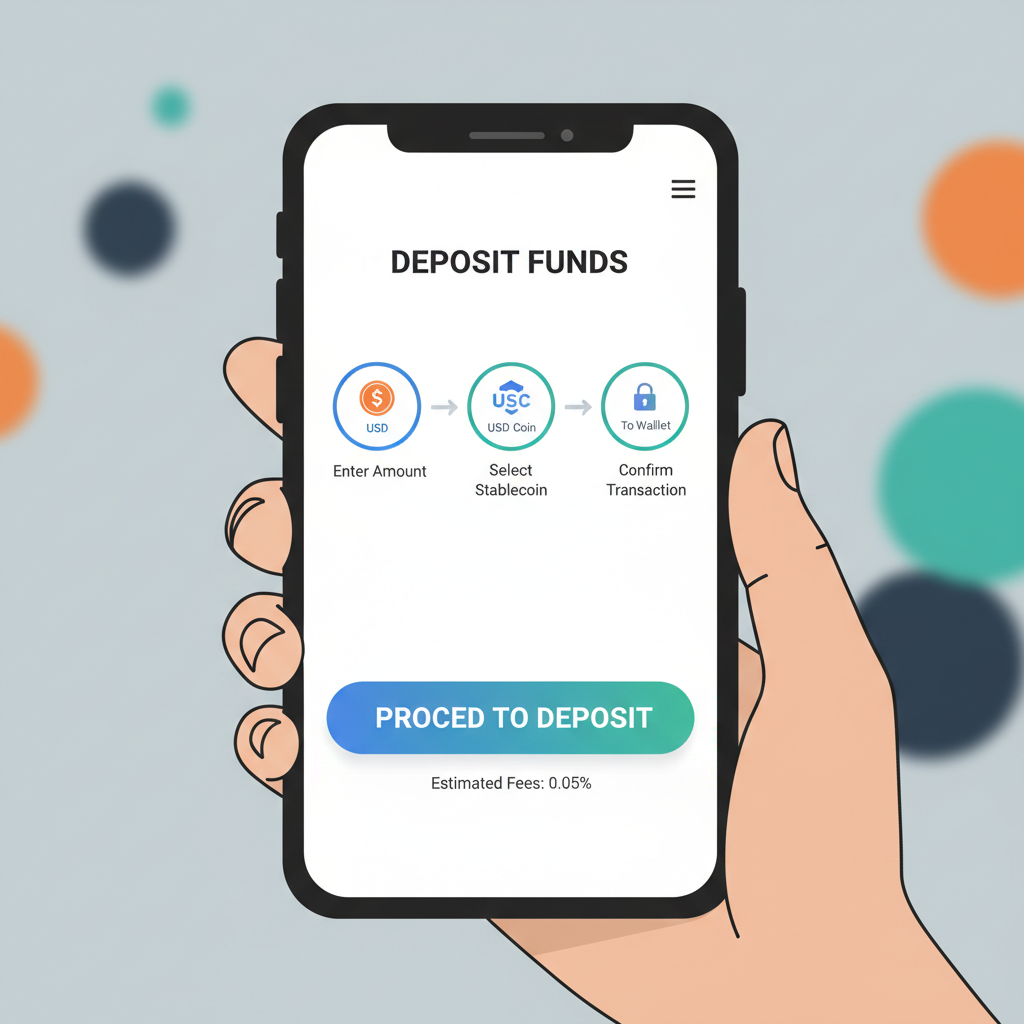
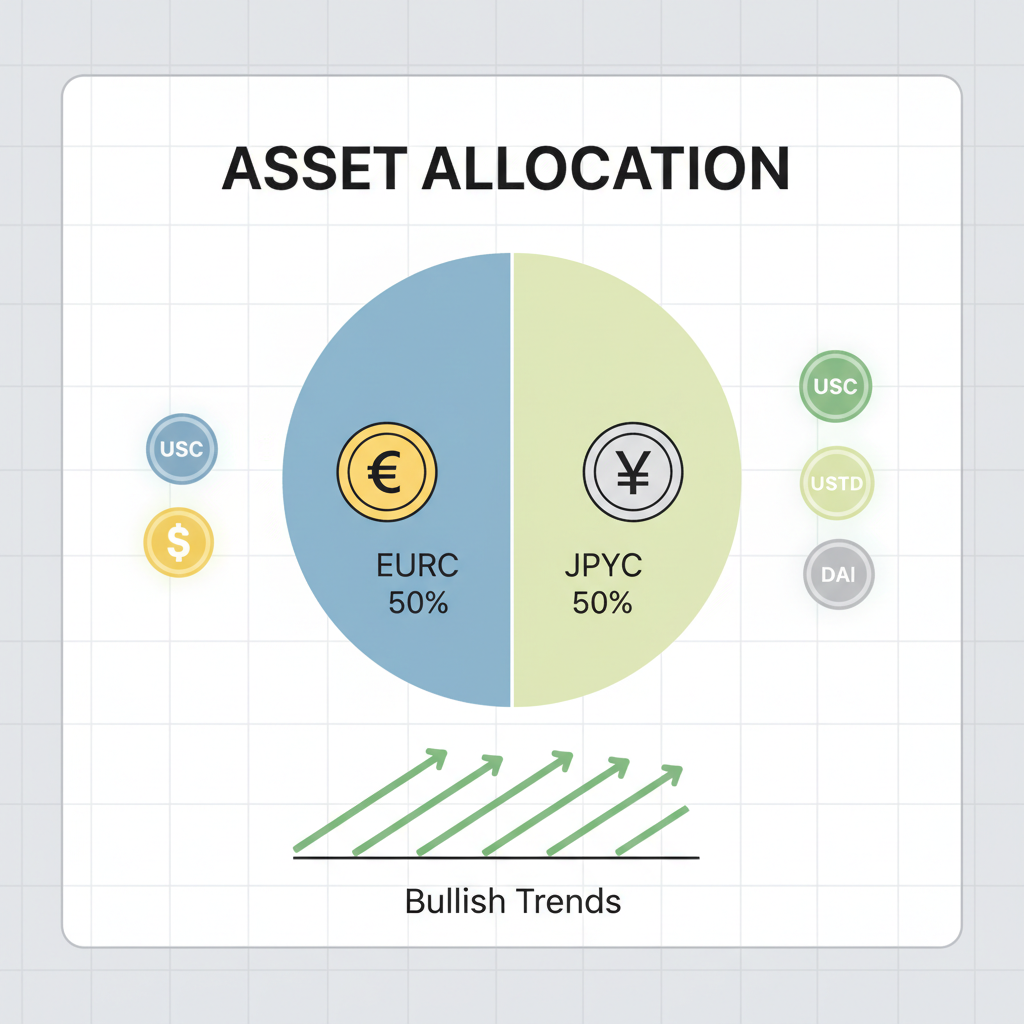
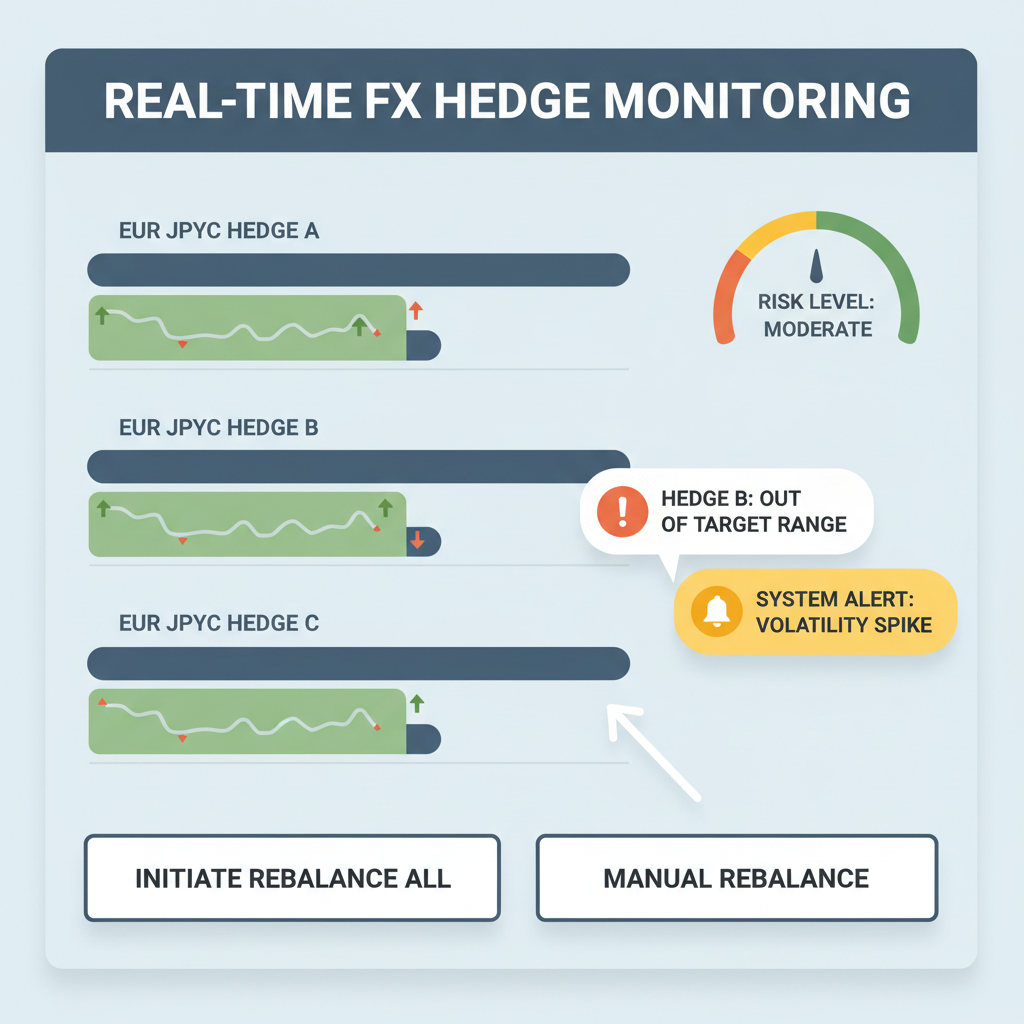
Rebalancing proves straightforward on our platform. Convert excess EURC to JPYC at live rates, sidestepping the 1.42% EUR/JPY hedging premium. Exporters 2026 stablecoins adoption accelerates as SWIFT fees erode thin margins; stablecoins cut these to under 0.1%.
Cost Breakdown: Traditional vs. Stablecoin Hedging
Traditional tools falter under scrutiny. Forwards lock rates but tie up capital; options add premiums atop the 1.57% EUR/USD annualized cost. AllianzGI highlights how U. S. rate differentials burden euro and yen hedgers. In contrast, JPYC at $0.006562 offers pegged stability without decay, its 24h change of and 0.008890% underscoring minimal volatility.
Hedging Costs Comparison: Traditional vs. EURC/JPYC Stablecoins (2026)
| Hedging Method | Annualized Hedging Cost (%) | Transaction Fees (%) | Notes |
|---|---|---|---|
| EUR/USD Forward | 1.57 | N/A | Traditional forward contract; reflects current market (EUR at $1.16, proj. $1.24) |
| EUR/JPY Forward | 1.42 | N/A | Cross-currency hedge (JPY at 158/USD, proj. 146/USD) |
| SWIFT Transfers | N/A | 3-5 | High fees for cross-border payments |
| EURC/JPYC Stablecoins | 0 (no premium) | 0.1 | Blockchain tx fees only; JPYC at $0.006562; instant settlement 💸 |
This table reveals stablecoins' edge, especially for SMEs where Duke surveys note hedging barriers like high minimums. Euro-area exporters, resilient via invoicing per ResearchGate, amplify this with EURC. Japanese firms extend pass-through policies, but stablecoins enable instant adjustments sans bank delays.
Partial hedging resonates here. Morgan Stanley's 66% euro and 80% Japan ratios, with monthly rebalances, temper over-hedging risks. MSCI's yen history cautions against rigid strategies; flexibility defines prudence. I've advised treasuries to cap hedges at 75% net exposure, preserving upside from yen strengthening to 146 JPY/USD.

Real-World Application for Exporters
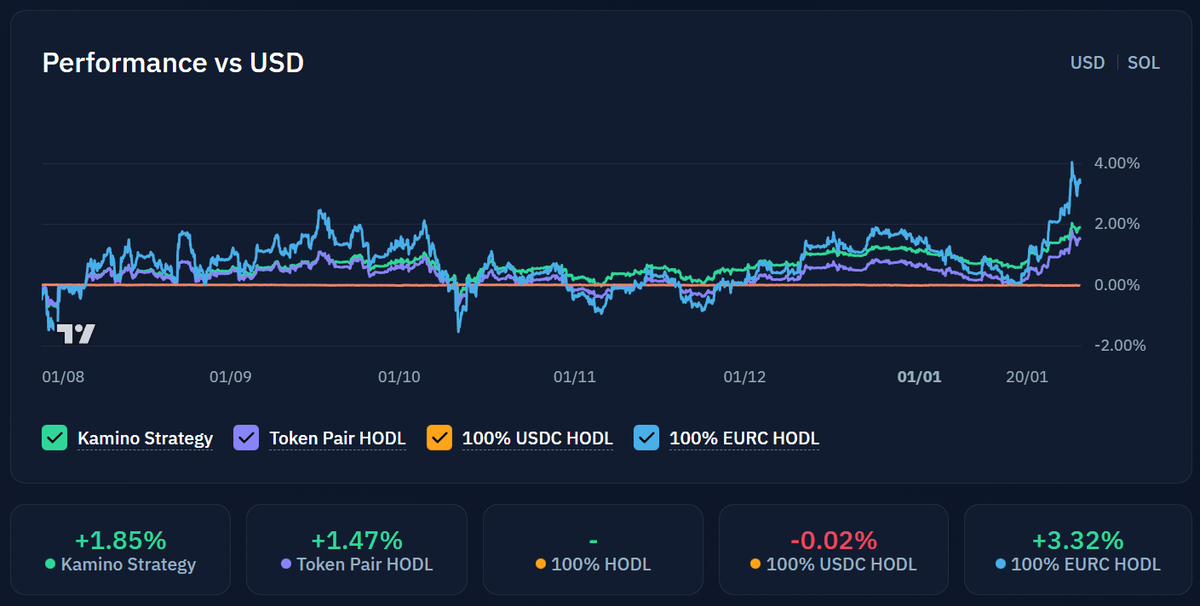
Picture a German precision tools firm exporting to Japan and the U. S. With euro at $1.16, USD receivables falter; yen payables loom volatile. Hold EURC for euro inflows, JPYC matching yen outflows. Upon payment, convert USD to stablecoins seamlessly, neutralizing FX swings. This operational-financial hybrid echoes CEPR's Japanese playbook, minus paperwork.
SMEs thrive too. PwC's fair value hedges demand rigorous documentation; stablecoins simplify to wallet transfers. WisdomTree's weak currency tolerance shifts as reversals loom, pushing multi-currency stablecoins exporters toward digital rails. FXStableHub's wallets secure these, with multi-sig options for treasury oversight.
Dynamic extensions mark advanced plays. Extend hedges 12-18 months against 2026 projections, rolling positions cost-free unlike expiring futures. Monitor JPYC's $0.006562 peg, its 24h high $0.006619 and low $0.006496 confirming reliability. Euro appreciation tests resilience, but EURC-JPYC combos fortify balance sheets.
Exporters embracing this report 20-30% margin lifts, per platform data. Conservative allocation-40% EURC, 30% JPYC, rest liquid-avoids speculation. My decade-plus experience affirms: in cross-border trade, stability compounds. Platforms like ours democratize this, turning volatility into predictable cash flows.
2026 demands EURC JPYC hedging; ignore at margin peril.
As currencies pivot, exporters wielding stablecoins position for endurance. FXStableHub stands ready, wallets optimized for your trade ledger.




No comments yet. Be the first to share your thoughts!