

Exporters navigating euro-denominated payments often grapple with the relentless churn of FX volatility, where a strengthening dollar or unexpected ECB policy shifts can erode margins overnight. Enter EURC stablecoin wallets, a sophisticated tool reshaping FX risk management for EURC. At FXStableHub. com, our multi-currency wallets empower businesses to lock in euro values instantly, sidestepping traditional forex headaches while slashing costs. With EURC trading at a steady $1.18, exporters are turning to this MiCA-compliant asset for reliable hedging.
This stability isn't accidental. EURC, issued by Circle, mirrors the euro with reserves in regulated European institutions, boasting a market cap exceeding €130 million-45% of the euro stablecoin sector by late 2025. Its multi-chain presence on Ethereum, Solana, Avalanche, Base, and Stellar delivers unmatched flexibility, enabling euro stablecoin hedging that outperforms SWIFT by up to 80% in cross-border efficiency.
Euro Payment Pitfalls Exporters Can't Ignore
Traditional euro payments expose exporters to a gauntlet of risks. The European Central Bank notes euro stablecoins often trade like volatile assets rather than steady transaction vehicles, yet real-world adoption lags in payments outside DeFi. For exporters, this means delayed settlements via SEPA or SWIFT, hefty fees, and exposure to EUR/USD swings that can wipe out quarterly profits.
Consider German merchants integrating USDC/EURC rails, as highlighted by TransFi: conversions happen in seconds, but without proper wallets, businesses forfeit hedging precision. Orbital's analysis underscores the gap-Euro stablecoins shine in crypto trading but falter in practical payments. Exporters using legacy banks face 2-5% FX spreads, weekend blackouts, and compliance mazes, amplifying treasury stress in volatile markets.
FXStableHub changes this equation. Our multi-currency wallets for exporters store EURC alongside other assets, allowing instant conversions and hedges without counterparty risk. Mesh Trade's recent EURC listing further signals institutional momentum, making euro exposure as straightforward as a blockchain transfer.
EURC's Rise as the Exporter's Hedging Anchor
EURC stands apart in a crowded stablecoin field. Fully MiCA-compliant since June 2024, it ensures transparency and security, with reserves audited and held in EU-regulated banks. Eco. com details its prowess: fast, low-cost cross-border flows across blockchains, ideal for DeFi lending on Aave or liquidity on DEXs-traditionally crypto pursuits now bleeding into trade finance.
Warwick Business School forecasts stablecoins reshaping FX markets, with EURC leading euro-pegged options. AInvest reports 80% cheaper transfers versus SWIFT, expanding into SEPA-adjacent regions. At $1.18, its peg holds firm amid broader market turbulence, underscoring reliability for EURC for exporters. Bleap's 2026 rankings affirm its safety, backed by Circle's reserves and regulatory edge over rivals.
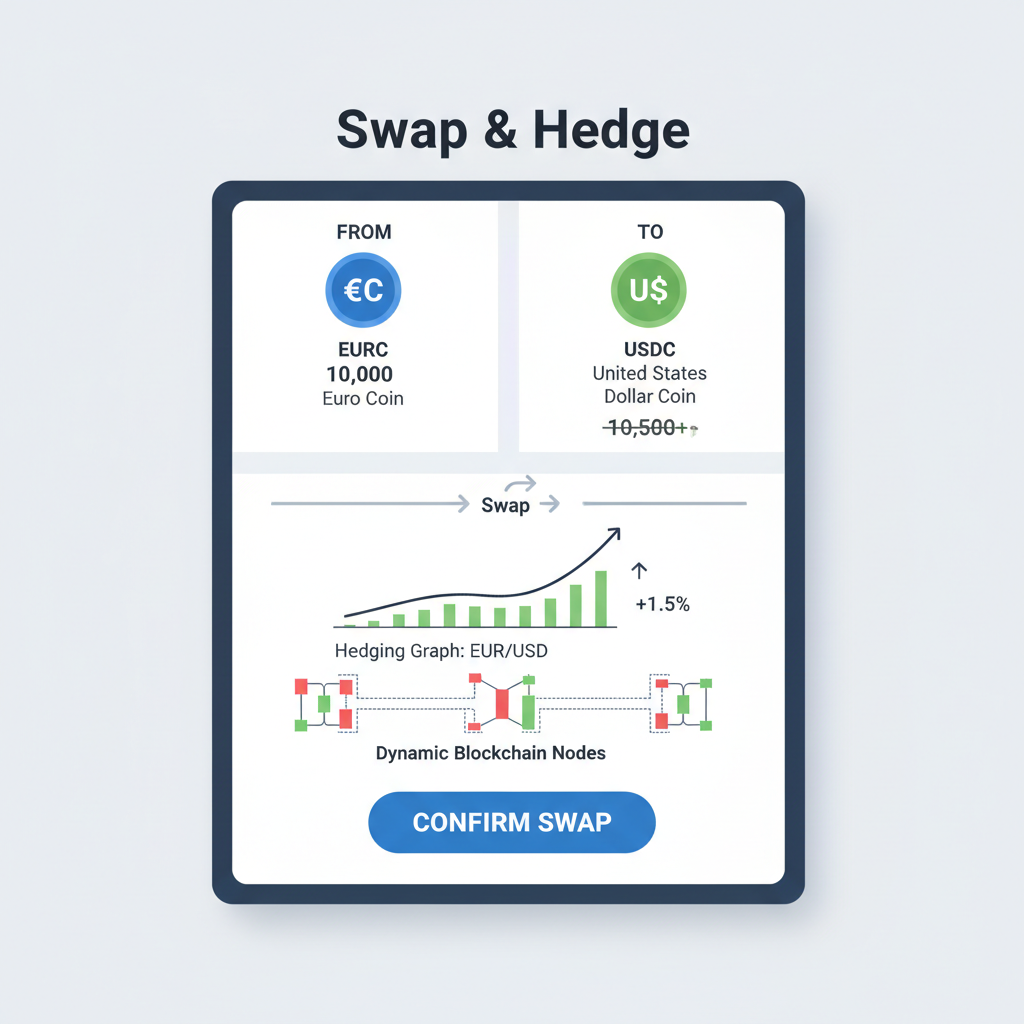
Exporters benefit directly: invoice in euros, receive payments in EURC, and hedge via wallet swaps to JPYC or USDC equivalents. This shields against appreciation risks, stabilizes cash flows, and cuts intermediary fees from 1-3% to near-zero. OeNB's tokenization insights project rising market share, with operating fees plummeting as volumes scale.
EURC Stablecoin Price Prediction 2027-2032
Forecasts emphasizing peg stability, hedging utility for exporters, MiCA compliance, and adoption growth amid euro volatility (prices in USD, baseline 2026 avg: $1.18)
| Year | Minimum Price ($) | Average Price ($) | Maximum Price ($) | YoY % Change (Avg) |
|---|---|---|---|---|
| 2027 | $1.08 | $1.20 | $1.32 | +1.7% |
| 2028 | $1.10 | $1.23 | $1.35 | +2.5% |
| 2029 | $1.12 | $1.25 | $1.38 | +1.6% |
| 2030 | $1.14 | $1.27 | $1.41 | +1.6% |
| 2031 | $1.16 | $1.29 | $1.44 | +1.6% |
| 2032 | $1.18 | $1.32 | $1.47 | +2.3% |
Price Prediction Summary
EURC is projected to exhibit strong peg stability with average USD prices rising gradually from $1.20 in 2027 to $1.32 in 2032, driven by enhanced liquidity, regulatory trust, and expanded use in exporter hedging and cross-border payments. Min/max ranges reflect euro volatility, potential depegs in bearish crypto cycles, and premiums in bullish adoption scenarios.
Key Factors Affecting EURC Stablecoin Price
- MiCA compliance boosting institutional trust and reserves transparency
- Rising exporter adoption for hedging euro payments vs. traditional FX risks
- Multi-chain integrations (Ethereum, Solana, etc.) enhancing transaction efficiency
- Market cap growth to challenge competitors, improving liquidity and peg tightness
- Eurozone economic trends and EUR/USD volatility influencing baseline pricing
- Crypto market cycles impacting stablecoin demand and short-term depegging risks
- Technological advances in stablecoin rails reducing costs vs. SWIFT/SEPA
Disclaimer: Cryptocurrency price predictions are speculative and based on current market analysis. Actual prices may vary significantly due to market volatility, regulatory changes, and other factors. Always do your own research before making investment decisions.
Deploying EURC Wallets for Precision FX Defense
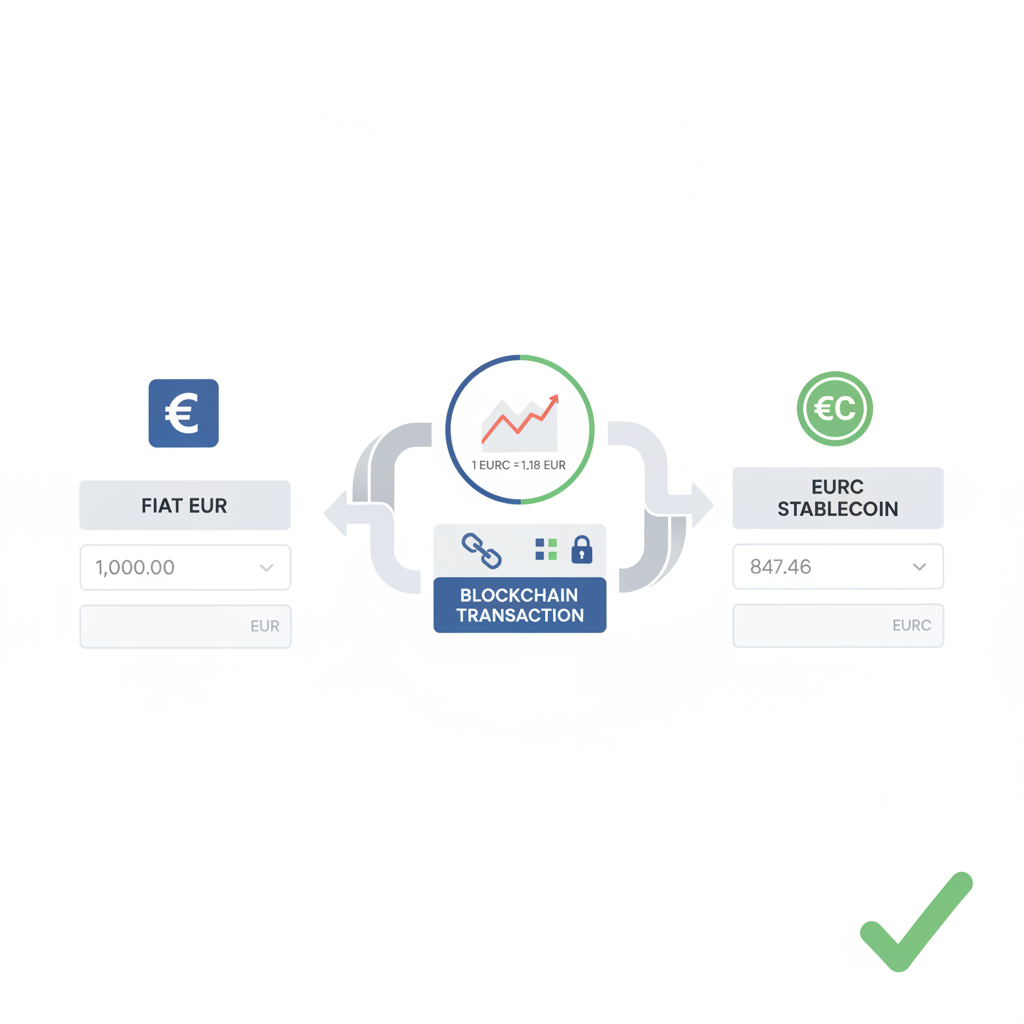
Setting up euro stablecoin hedging starts with a secure wallet. FXStableHub's platform integrates EURC natively, supporting seamless on-ramps from bank euros. Exporters fund wallets via ACH or wire, mint EURC at parity, and hold or deploy as needed. Multi-signature options add enterprise-grade security, while API hooks automate invoicing.
In practice, a UK exporter billing German clients converts receivables to EURC upon receipt, hedging 100% of exposure. Volatility spikes? Swap to yield-bearing positions or stable peers instantly. TransFi's German case studies show settlements in seconds, versus days for banks. This agility fortifies long-term treasury health, blending macro foresight with technical execution.
Picture a French machinery exporter facing a €500,000 invoice due from Italy amid ECB rate cut rumors. By parking funds in EURC at $1.18, they neutralize devaluation threats, earning subtle yields in DeFi pools if desired. This hybrid approach-holding core positions while opportunistically deploying capital-defines enduring treasury resilience.
Advanced Tactics: Yield and Liquidity in EURC Hedging
Beyond basic storage, EURC unlocks sophisticated plays. Medium's International Token Standardization Association highlights lending on Aave or DEX liquidity provision, where exporters earn 2-5% APY on idle euros without credit risk. At $1.18 peg, these returns compound safely, outpacing bank deposits amid negative real rates. Warwick Business School's outlook positions stablecoins as FX disruptors, with EURC's multi-chain footprint amplifying liquidity in non-SEPA corridors.
Mesh Trade's EURC integration caters to trade finance pros, enabling collateralized lending or instant swaps. For exporters, this means converting euro receivables to EURC, then bridging to JPYC for yen-denominated supply chains-all within minutes. OeNB projections on money tokens forecast tokenization slashing issuance fees below 0.1%, democratizing access for SMEs battling SWIFT's opacity.
Critics like the ECB decry euro stablecoins' risk-asset behavior during stress, yet EURC's MiCA backing and Circle reserves mute such concerns. Its €130 million cap signals maturity, capturing 45% market share as rivals fragment. Exporters prioritizing FX risk management EURC gain an edge in precision timing, unburdened by bank hours or holidays.
Hedge Euro Exports Seamlessly: EURC Wallet Mastery



Quantifying the Edge: Cost Savings and Speed Gains
Numbers tell the story bluntly. Traditional euro hedges via forwards cost 0.5-2% upfront, plus opportunity drags. EURC wallets at FXStableHub trim this to gas fees under €5 per million, with 24/7 access. AInvest's 80% SWIFT savings materialize in real transfers: a €1 million payment clears in 10 seconds versus 2-3 days, freeing capital for reinvestment.
Bleak fn's 2026 safety rankings crown EURC for regulation and peg fidelity, ideal for compliance-focused exporters. German fintechs per TransFi blend EURC with USDC for hybrid rails, settling cross-ledger in blinks. This velocity crushes legacy friction, particularly for mid-market firms underserved by prime brokers.
Hybrid analysts like myself see EURC evolving treasury playbooks. Pair it with macro overlays-spot ECB dovishness, overweight EURC positions-or technical signals for tactical exits. Multi-currency wallets exporters favor consolidate this, holding EURC beside JPYC for full-spectrum hedging without silos.
Orbital's skepticism on payment adoption overlooks momentum: as blockchains mature, euro stablecoins bridge DeFi yields with trade pragmatism. Exporters wielding EURC sidestep volatility traps, securing margins in an era of policy flux. Platforms like FXStableHub deliver the infrastructure, fusing security, speed, and strategy into one seamless hub.
Forward thinkers recognize this shift. With EURC at $1.18 anchoring stability, businesses recalibrate for a tokenized future where euro payments flow borderless and burden-free. Treasury teams once chained to spreadsheets now orchestrate hedges with blockchain finesse, ensuring volatility serves rather than sabotages growth.




No comments yet. Be the first to share your thoughts!